Leather sofas are not only a stylish addition to any living room but also an investment that requires regular care and maintenance to keep them looking their best.
We will explore the importance of cleaning leather sofas, the benefits of regular cleaning, the necessary tools and products for cleaning, and provide a step-by-step guide on how to clean and remove stains from leather sofas.
Discover valuable tips on how to maintain and protect your leather sofa to ensure it stays looking new for years to come.

Why Is It Important To Clean Leather Sofas?
Cleaning your leather couch is crucial for maintaining its durability, appearance, and comfort and regular maintenance helps prevent damage, discoloration, and wear over time.
What Are The Benefits Of Regular Leather Sofa Cleaning?
Regular cleaning of leather sofas can help remove stains, dust, debris, and body oils, which accumulate over time and can cause the leather to degrade if not properly maintained.
By keeping your leather sofa clean, you not only enhance its appearance but also extend its lifespan. Dust and allergens can settle in the crevices of the leather, leading to deterioration over time. Regular cleaning ensures that these harmful particles are removed, improving the overall air quality in your living space.
In addition, removing body oils through frequent cleaning prevents them from seeping into the leather and causing discoloration or a greasy buildup. This proactive approach also plays a crucial role in preventing stains from setting in and maintaining the pristine look of your sofa for longer periods.
Explore: How To Clean Mold Out Of A Leather Couch
What Tools And Products Are Needed For Cleaning Leather Sofas?
For effective leather sofa cleaning, you’ll need a variety of tools and products including specialized leather cleaners, soft cloths, vacuum cleaners, and conditioning products to ensure thorough cleaning and maintenance.
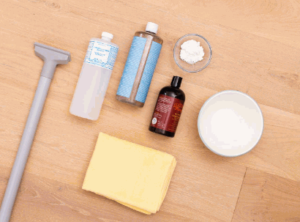
What Are The Recommended Cleaning Products For Leather Sofas?
Recommended cleaning products for leather sofas include specialized leather cleaners, mild soaps like Castile soap or Ivory Soap Flakes, and even homemade solutions using materials like vinegar for gentle and effective cleaning.
For a milder alternative, Castile soap and Ivory Soap Flakes are excellent choices that can effectively clean leather without causing any damage.
If you prefer a more natural approach, creating a homemade cleaning solution using a mixture of vinegar and water can work wonders in removing dirt and grime without harsh chemicals.
What Tools Are Needed For Leather Sofa Cleaning?
Cleaning a leather sofa effectively requires tools such as a vacuum with a soft brush attachment, soft cloths for wiping, and a steamer for deep cleaning without causing damage.
Regarding cleaning leather sofas, using a vacuum with a soft brush attachment is crucial for removing dust and debris without scratching the surface. The gentle bristles help to lift dirt without causing any harm to the leather.
Soft cloths play a vital role in the maintenance process, as they are used for wiping away spills and stains. They are gentle enough to avoid scratching or damaging the leather while effectively removing dirt.
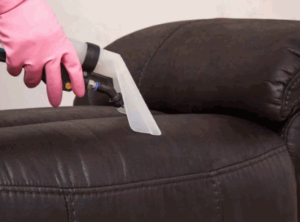
For a more thorough cleaning, a steamer is highly beneficial. The steamer helps to sanitize the leather without the need for harsh chemicals, making it an eco-friendly option. The steam penetrates deep into the leather pores, loosening dirt and grime for easy removal. This method not only cleans the sofa effectively but also helps to maintain the leather’s natural shine and texture.
How To Clean Leather Sofas?
Cleaning a leather sofa involves a series of steps that include vacuuming to remove dust and debris, preparing a suitable cleaning solution, testing it on a small area, cleaning the entire sofa, wiping it with a damp cloth, and drying it with a clean towel.
Step 1: Vacuum The Sofa
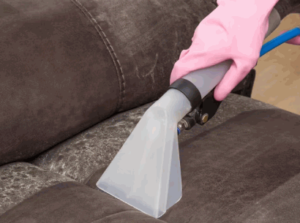
The first step in cleaning a leather sofa is to vacuum it thoroughly to remove dust, debris, and any loose dirt from the surface and crevices.
Using a handheld vacuum cleaner with a soft brush attachment is ideal for this task, as it allows you to gently lift the dirt without causing any damage to the leather.
Make sure to pay special attention to the seams and folds of the sofa, as these areas tend to accumulate more dust and debris.
This vacuuming process is crucial as it prevents dust and debris from scratching the leather during the subsequent cleaning steps.
Step 2: Prepare The Cleaning Solution
To prepare the cleaning solution for your leather sofa, mix a small amount of mild soap or Castile soap with water, or use a mixture of vinegar and water for a natural cleaning alternative.
For a soapy solution, mix a teaspoon of mild soap with about a quart of water in a container. Stir the solution gently until the soap dissolves completely. This gentle soap solution can effectively remove dirt and grime without harming the leather.
If you opt for a natural approach, create a vinegar and water mixture by combining equal parts of white vinegar and water. Vinegar acts as a natural disinfectant and can help eliminate odors while being safe for leather surfaces.
Step 3: Test The Cleaning Solution On A Small Area
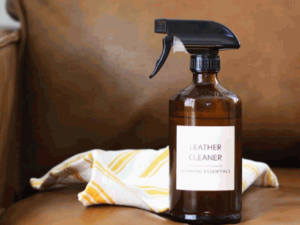
Before applying the cleaning solution to the entire sofa, it’s crucial to test it on a small, inconspicuous area to ensure it doesn’t cause any discoloration or damage to the leather.
This precautionary step can save you from potential disasters.
- To perform the test, mix a small amount of the cleaning solution as per the instructions.
- Dab a bit of the solution on a hidden area – like the back or underside of the sofa – using a clean cloth.
- Allow it to sit for a few minutes, then gently wipe it off.
- Look for any discoloration, texture changes, or adverse reactions on the leather surface.
- If everything appears normal after 24 hours, you can proceed with confidence to clean the entire sofa.
Step 4: Clean The Entire Sofa
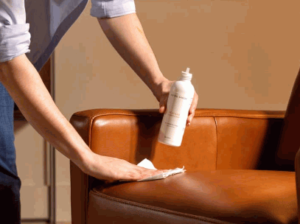
Once you’ve tested the solution, use a soft cloth to gently clean the entire sofa, working in small sections and ensuring even coverage to avoid streaks and uneven cleaning.
Start from the top of the sofa and work your way down, applying gentle pressure in circular motions to lift dirt and grime effectively. Focus on any stained areas by using a mild soap solution and a damp cloth to gently break down the dirt without harsh scrubbing.
Be mindful of the stitching by avoiding excessive moisture in those areas. As you progress, regularly inspect your clothes for dirt buildup and switch to a clean area to prevent re-depositing dirt onto the furniture.
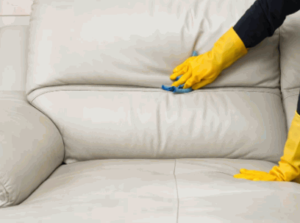
Step 5: Wipe The Sofa With A Damp Cloth
After cleaning with the solution, wipe the sofa with a damp cloth to remove any remaining soap or cleaning residue, ensuring the leather is left clean and free from streaks.
When choosing a damp cloth for this task, opt for a soft, lint-free cloth to avoid scratching the leather surface. Microfiber cloths are ideal for this purpose, as they are gentle yet effective at picking up residue. Be sure to wring out the cloth thoroughly before wiping the sofa to prevent excess water from seeping into the leather.
To avoid water damage, do not oversaturate the cloth and make a gentle, light pass over the sofa’s surface. Ensure all cleaning residues are completely removed to maintain the leather’s appearance and prevent any potential damage over time.
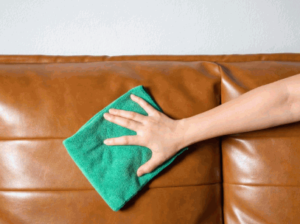
Step 6: Dry The Sofa With A Clean Towel
The final step in the cleaning process is to dry the sofa with a clean towel, ensuring that no moisture remains to prevent any potential damage or mold growth.
Drying the sofa thoroughly is crucial as leftover moisture can not only lead to water stains but also create a perfect breeding ground for mold and mildew. To properly dry the sofa, gently press the clean towel onto the damp areas, absorbing as much moisture as possible. Avoid rubbing vigorously as it may damage the fabric. A microfiber towel is ideal for this task due to its absorbent nature and gentle touch that won’t harm the upholstery texture.
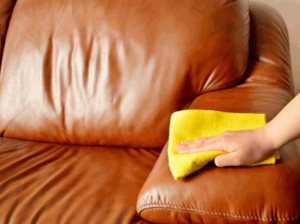
How To Remove Stains From Leather Sofas?
Removing stains from leather sofas requires understanding the type of stain, such as grease or ink, and using appropriate methods and products like baking soda or specialized stain removers to effectively eliminate them.
What Are The Common Types Of Stains On Leather Sofas?
Common types of stains on leather sofas include grease, ink, and body oils, each requiring specific methods for effective removal without damaging the leather.
Grease stains are often noticeable on leather sofas and can result from spilled food or cooking mishaps. If left untreated, they can seep into the leather and cause permanent damage. To tackle grease stains, using a gentle leather cleaner specifically designed for grease removal is recommended.
Ink stains, common from pens or markers, can be stubborn and difficult to remove. Immediate action is crucial by blotting the stain with a clean cloth. Using a leather-safe ink remover can aid in lifting the stain effectively.
Body oils can accumulate over time and darken the leather’s surface. Regular conditioning with a leather conditioner is essential to maintain the leather’s natural moisture levels and prevent discoloration. Spot cleaning with a mild soap solution is helpful in addressing body oil stains without causing further harm to the leather.
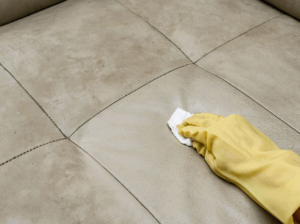
How To Remove Different Types Of Stains From Leather Sofas?
To remove different types of stains from leather sofas, such as grease or ink, use specific methods like applying baking soda for grease or rubbing alcohol for ink stains, ensuring minimal impact on the leather.
For grease stains, start by blotting the excess grease with a clean cloth. Then sprinkle baking soda over the affected area and let it sit for a few hours to absorb the grease. Afterward, gently brush off the baking soda and wipe the area with a damp cloth.
When dealing with ink stains, dampen a clean cloth with rubbing alcohol and gently dab the stained area. Avoid rubbing vigorously to prevent spreading the ink further. Continue blotting until the ink fades, then wipe the area with a damp cloth to remove any residue.
It is vital to use the correct method for each type of stain to prevent damaging the leather further. Always test any cleaning product on a hidden area of the sofa first to ensure it does not cause discoloration or damage.
Tips For Maintaining And Protecting Leather Sofas
Maintaining and protecting leather sofas involves regular cleaning, conditioning, and following specific tips like avoiding direct sunlight and heat sources to prevent fading and damage.
How To Prevent Stains And Damage On Leather Sofas?
To prevent stains and damage on leather sofas, use protective measures like applying a conditioner to create a barrier against body oils and spills, and placing the sofa away from direct sunlight and heat sources.
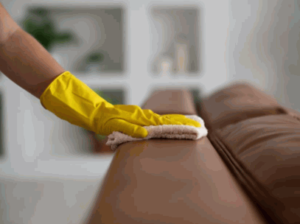
It’s crucial to clean spills immediately to prevent them from seeping into the leather and causing permanent damage. Regularly dusting and wiping down the sofa with a soft, damp cloth can also help maintain its shine and prevent dirt buildup. Avoid using harsh chemicals or cleaners that can strip the natural oils from the leather, leading to cracks and dryness.
Consider investing in a quality leather protector spray to further shield the sofa from stains and spills. When moving the sofa, lift it instead of dragging it to prevent scratches and tears on the delicate leather surface. By taking these preventive measures, you can extend the lifespan of your leather sofa and keep it looking its best for years to come.
How To Keep Leather Sofas Looking New?
Keeping leather sofas looking new involves regular cleaning, conditioning, and occasional buffing to restore shine, as well as seeking professional cleaning services when necessary.
Regularly clean your leather sofa with a damp cloth to remove dust and dirt that can accumulate over time.
It’s important to avoid using harsh chemicals or abrasive cleaners, as they can damage the leather’s finish.
After cleaning, apply a high-quality leather conditioner to nourish and maintain the leather’s suppleness.
For a professional touch, consider scheduling annual deep cleaning services to remove stubborn stains and deep-seated dirt.